Septic tank and cesspit systems are both used for off-mains drainage, but they work in very different ways. If your property is not connected to the public sewer, you may need a private drainage system to manage wastewater from toilets, sinks, showers, baths, washing machines and dishwashers. The right system depends on the property, land, ground conditions, access, regulations and long-term maintenance needs.
The simplest difference is this: a septic tank treats wastewater partly and usually discharges liquid effluent to a drainage field, while a cesspit is a sealed holding tank that stores all wastewater until it is emptied. A septic tank is a treatment and discharge system. A cesspit is a storage-only system.
Understanding the difference matters because installation, emptying frequency, running costs, environmental impact and suitability can vary significantly. For rural homes, commercial sites, agricultural properties and developments across Sussex, East Sussex, Surrey and Kent, professional advice is important before installing, replacing or buying a property with any off-mains drainage system.
CJ Groundworks provides septic tank installation, cesspit installation, sewage treatment plant installation, drainage systems, CCTV drain surveys and wider groundworks services.
What Is a Septic Tank?
A septic tank is an underground wastewater treatment tank used where a property is not connected to the mains sewer. Wastewater enters the tank from the property and separates inside. Solids settle at the bottom as sludge, oils and lighter materials rise to the top, and liquid effluent flows out for further treatment in the ground.
A septic tank does not fully treat wastewater on its own. The liquid leaving the tank still needs to be discharged safely through a suitable drainage field, also known as an infiltration system. GOV.UK guidance explains that a septic tank treats sewage before wastewater discharges to ground through a drainage field, and that septic tank effluent must not be discharged directly to a watercourse. (GOV.UK)
This means a septic tank needs more than just the tank itself. The surrounding land must be suitable for a drainage field, and the soil must allow treated effluent to disperse safely.
What Is a Cesspit?
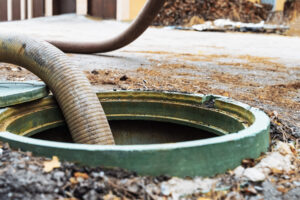
A cesspit, also called a cesspool, is a sealed underground tank that stores wastewater from a property. Unlike a septic tank, it does not treat the wastewater and does not discharge liquid into the ground. Everything that enters the cesspit remains there until it is removed by a licensed waste carrier.
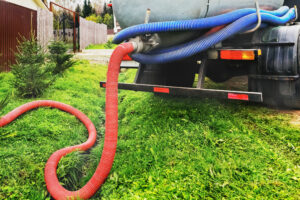
This makes a cesspit simple in principle, but potentially expensive to run. Because there is no outlet, the tank must be emptied regularly. The frequency depends on the size of the tank, number of occupants and how much water the property uses.
Cesspits are sometimes used where ground conditions are unsuitable for a septic tank drainage field or where discharge is not possible. They can be useful as a last-resort solution, but they need reliable access for tankers and careful monitoring to avoid overflows.
The Main Difference Between a Septic Tank and Cesspit
The main difference between a septic tank and cesspit is what happens to the wastewater after it enters the tank.
A septic tank separates and partly treats wastewater, then sends the liquid effluent to a drainage field for further treatment in the ground. A cesspit simply stores wastewater until it is emptied.
This affects nearly everything else. A septic tank usually needs suitable land and drainage conditions. A cesspit needs enough storage capacity and frequent emptying. A septic tank has an outlet. A cesspit should be sealed with no discharge. A septic tank may be more practical for regular household use if the site is suitable. A cesspit may be more restrictive because it fills up continuously.
How a Septic Tank Works
A septic tank relies on natural separation and bacterial activity. Wastewater enters the tank from the property. Heavier solids settle to the bottom, forming sludge. Lighter fats, oils and grease float to the top, forming a scum layer. The liquid layer between them flows out of the tank to the drainage field.
The drainage field is a key part of the system. It normally consists of perforated pipes laid in trenches so effluent can trickle into the ground for further treatment. GOV.UK describes a drainage field as a series of pipes with holes placed in trenches, arranged so wastewater can pass through the ground for further treatment. (GOV.UK)
If the drainage field fails, the septic tank system may no longer function properly. Warning signs can include wet patches, foul smells, slow-draining fixtures, overflowing chambers or waterlogged ground.
How a Cesspit Works
A cesspit works more simply because there is no treatment process or discharge route. Wastewater flows from the property into the sealed tank. The tank fills gradually and must be emptied before it reaches capacity.
Because the system stores all wastewater, water use directly affects emptying frequency. Toilets, showers, baths, washing machines and dishwashers all contribute to the volume. A busy family home, commercial premises or holiday property may fill a cesspit quickly.
A cesspit must be watertight. If it leaks, it can pollute the ground. If it overflows, it can create serious hygiene and environmental problems. This is why cesspits need regular checks, good access and planned emptying.
Septic Tank vs Cesspit: Which Needs More Emptying?
A cesspit usually needs emptying much more often than a septic tank. This is because a cesspit stores all wastewater and has no outlet. Every litre of wastewater used by the property remains in the tank until removed.
A septic tank also needs emptying, but mainly to remove sludge and scum that build up over time. The liquid effluent leaves the tank through the drainage field, so the tank does not fill in the same way as a cesspit.
Defra guidance advises that septic tanks and small sewage treatment plants should be maintained properly and sludge should be emptied regularly by a registered waste carrier. (Defra)
The exact emptying frequency depends on the system size, number of occupants, use levels and condition. A professional contractor or waste carrier can advise based on the specific system.
Which System Is Cheaper To Run?
A septic tank is often cheaper to run than a cesspit if the site is suitable and the system is working correctly. This is because a septic tank usually needs periodic desludging rather than frequent full emptying.
A cesspit can be more expensive over time because it may need regular emptying throughout the year. The more water the property uses, the more often the tank fills. For a large household or commercial premises, this can become a significant ongoing cost.
However, installation costs can vary. A septic tank system may require a suitable drainage field, ground assessment, excavation and pipework. A cesspit may be simpler to install in some cases but can bring higher long-term emptying costs. The best choice should consider both installation and ongoing maintenance, not just the initial price.
Which System Is Better for the Environment?
A properly designed and maintained septic tank system can be suitable where the ground conditions allow safe discharge through a drainage field. However, it must not cause pollution and must comply with the relevant rules.
A cesspit should not discharge anything into the environment. In that sense, it avoids the need for a drainage field, but it relies entirely on safe storage and regular waste removal. If it leaks or overflows, it can create pollution and hygiene risks.
Environmental performance depends on correct design, installation, maintenance and use. No off-mains drainage system should be treated as fit-and-forget.
Septic Tank Rules Property Owners Should Know
Septic tanks are subject to rules designed to prevent pollution. Under the general binding rules, a septic tank or small sewage treatment plant operator may not need a permit if the system meets the relevant conditions. GOV.UK states that if the system does not meet the general binding rules, the operator may need to make changes or apply for a permit where those rules cannot be met. (GOV.UK)
A key point is that septic tank effluent must not discharge directly to a watercourse such as a river, stream, ditch, canal or coastal water. GOV.UK guidance specifically says septic tank effluent must not be discharged to a watercourse. (GOV.UK)
If you are buying, selling, installing or replacing a septic tank, it is important to check the current discharge route and whether the system is compliant.
Do Cesspits Have the Same Rules?
Cesspits are different because they should be sealed and should not discharge to the ground or a watercourse. They are storage tanks, not treatment systems. The main responsibility is to keep the tank watertight, prevent leaks or overflows and arrange regular emptying by an authorised waste carrier.
Although the general binding rules mainly cover small sewage discharges from septic tanks and sewage treatment plants, a cesspit still carries environmental and legal responsibilities because sewage must be stored and removed safely.
For property owners, the practical checks are simple: know where the tank is, know its capacity, check it is watertight, keep emptying records and make sure tankers can access it safely.
When Is a Septic Tank Suitable?
A septic tank may be suitable where the property has enough land, the soil is appropriate and a drainage field can be installed safely. Ground conditions are crucial. The soil must be able to accept and treat effluent without causing pollution, flooding or waterlogging.
Septic tanks are often used for rural homes and small sites, but they are not suitable everywhere. Heavy clay, high groundwater, limited land, steep slopes, nearby watercourses or failed drainage fields can all make a septic tank difficult or inappropriate.
A professional assessment is important before installation. This may involve checking the site layout, soil type, existing drainage, water table, access and property use.
CJ Groundworks provides septic tank installation services across Sussex, East Sussex, Surrey and Kent.
When Is a Cesspit Suitable?
A cesspit may be considered where discharge to ground is not possible and there is no mains sewer connection available. This may be due to unsuitable soil, lack of space for a drainage field, high groundwater or site restrictions.
However, a cesspit is usually a more demanding option for day-to-day use because it requires frequent emptying. It may be suitable for some properties, but the ongoing cost and access requirements should be carefully considered.
Before choosing a cesspit, property owners should think about water usage, tanker access, emptying costs, tank capacity and future property use. A cesspit that is too small or difficult to access can quickly become inconvenient and expensive.
CJ Groundworks provides cesspit installation for suitable sites.
What About Sewage Treatment Plants?
A sewage treatment plant is another off-mains drainage option. It treats wastewater to a higher standard than a septic tank by using mechanical or electrical components. GOV.UK guidance explains that small sewage treatment plants work in a similar way to septic tanks but use mechanical parts to treat wastewater to a higher standard before discharge. (GOV.UK)
A sewage treatment plant may be suitable where a septic tank is not appropriate or where a higher level of treatment is needed. However, it usually requires servicing, power and maintenance because it has working components.
For many rural properties, the choice may not simply be septic tank or cesspit. A sewage treatment plant may be the better long-term solution, depending on the site and discharge requirements.
More information is available on the sewage treatment plant page.
Septic Tank and Cesspit Maintenance
Both systems need maintenance, but the type of maintenance differs. A septic tank needs regular desludging, inspection and protection of the drainage field. Owners should avoid putting fats, oils, wipes, chemicals and unsuitable materials into the system because they can cause blockages or disrupt operation.
A cesspit needs regular emptying and monitoring. Because it has no outlet, the level inside the tank is critical. If it becomes too full, there is a risk of backup or overflow. Alarms, level checks and planned emptying can help avoid emergencies.
Good records are valuable for both systems. Emptying receipts, service reports, installation details and inspection notes can help with maintenance and are useful when selling a property.
Warning Signs of Septic Tank or Cesspit Problems
Warning signs should not be ignored. With a septic tank, problems may show as slow drains, bad smells, overflowing inspection chambers, wet ground around the drainage field or gurgling pipes. These may indicate a blockage, full tank, damaged pipework or drainage field failure.
With a cesspit, warning signs include high tank levels, sewage smells, slow drainage, alarms sounding, damp ground near the tank or the need for unexpectedly frequent emptying. Any sign of leakage or overflow should be treated seriously.
A CCTV drain survey can help identify pipe defects, blockages, root ingress or damaged connections. Tank inspections can also help assess the condition of the system before problems become more severe.
Buying a Property With a Septic Tank or Cesspit
If you are buying a property with a septic tank or cesspit, ask for clear documentation before exchange. You should know the system type, location, age, capacity, discharge route, emptying records, service history, access arrangements and whether the system is shared.
For a septic tank, check where the effluent discharges. If it discharges directly to a ditch, stream or other watercourse, that is a serious issue that may require upgrading. For a cesspit, check how often it is emptied and whether it is watertight.
A specialist drainage survey is sensible before purchase. It can help identify defects, compliance concerns and likely future costs.
Example: Rural Home With a Septic Tank
A rural home has a septic tank serving two bathrooms, a kitchen and utility room. The tank discharges to a drainage field in the garden. The system may be suitable if the drainage field is in good condition, the tank is correctly sized, and emptying has been carried out regularly.
However, if the garden is waterlogged, the drainage field has failed or the tank discharges into a ditch, the buyer or owner may face upgrade costs. In this case, a professional inspection would be important before making decisions.
Example: Cottage With a Cesspit
A small cottage has a cesspit because the soil is unsuitable for a drainage field. The system may work safely if the tank is sealed, large enough and emptied regularly. However, the owner needs to budget for ongoing tanker visits.
If the cottage becomes a holiday let or is extended for more occupants, wastewater use may increase. That could mean the cesspit fills much faster, increasing costs and inconvenience.
This is why future use should always be considered when choosing or assessing an off-mains drainage system.
FAQs
Is a cesspit the same as a septic tank?
No. A septic tank partly treats wastewater and usually discharges liquid effluent to a drainage field. A cesspit is a sealed tank that stores all wastewater until it is emptied.
Does a cesspit need emptying more often than a septic tank?
Yes, usually. A cesspit stores all wastewater, so it fills continuously. A septic tank mainly needs emptying to remove sludge and scum, while liquid effluent passes to a drainage field.
Can a septic tank discharge into a ditch?
No. Septic tank effluent must not discharge directly into a watercourse such as a ditch, stream or river. It usually needs a suitable drainage field or another compliant solution. (GOV.UK)
Which is cheaper, a septic tank or a cesspit?
A septic tank is often cheaper to run if the site is suitable because it usually needs less frequent emptying. A cesspit can have lower treatment complexity but higher ongoing emptying costs.
Can CJ Groundworks install septic tanks and cesspits?
Yes. CJ Groundworks provides septic tank installation, cesspit installation, sewage treatment plant installation and drainage services across Sussex, East Sussex, Surrey and Kent.
Summary
The difference between a septic tank and cesspit is simple but important. A septic tank partly treats wastewater and discharges liquid effluent to a drainage field. A cesspit stores all wastewater in a sealed tank until it is emptied.
A septic tank can be practical where ground conditions and land space are suitable. A cesspit may be used where discharge is not possible, but it usually requires more frequent emptying and careful monitoring. A sewage treatment plant may also be worth considering where a higher level of treatment is needed.
For septic tank installation, cesspit installation, sewage treatment plants, drainage systems and groundworks across Sussex, East Sussex, Surrey and Kent, contact CJ Groundworks. Call 0140 373 3214 or email chris@cjgroundworks.com to discuss your project.