Choosing the right foundation is one of the most important decisions in any construction project. Both the raft foundation and the strip foundation are popular choices in UK building design — but understanding their differences is crucial to ensure stability, longevity, and cost efficiency.
At CJ Groundworks, we specialise in a range of building foundations, offering expert advice and installation across the UK. Whether you’re building a new home, extension, or commercial unit, selecting the correct foundation type can make a significant difference to the success of your project.
1. What Is a Raft Foundation?
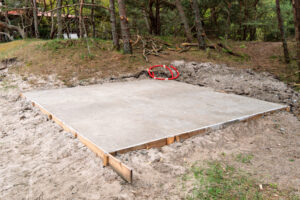
A raft foundation (also known as a mat foundation) is a large, continuous concrete slab that spreads across the entire footprint of a building. It supports the structure by distributing the load evenly over a large area, making it particularly effective for sites with weaker or variable soil conditions.
Key Features of a Raft Foundation:
- Made from reinforced concrete
- Covers the full building footprint
- Reduces differential settlement
- Ideal for low bearing capacity soils
- Suitable for residential and commercial properties
A raft foundation essentially “floats” on the ground like a raft, providing stability by spreading the load evenly. This design is often chosen when traditional strip foundations would require deep excavation due to poor ground strength.
2. What Is a Strip Foundation?
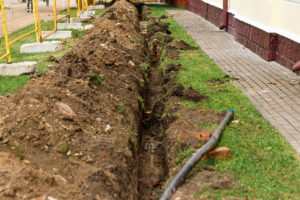
A strip foundation is a continuous strip of concrete that supports load-bearing walls. It’s one of the most traditional types of foundations used in UK construction and works best on firm, stable ground.
Key Features of a Strip Foundation:
- Supports individual walls or columns
- Requires good soil bearing capacity
- Typically used for smaller residential projects
- More cost-effective on suitable ground conditions
- Easier and quicker to install
A strip foundation provides a sturdy and economical base for structures with predictable loads and solid ground conditions. However, it may not perform as well on soft or uneven soil where differential settlement is likely.
3. Key Differences Between Raft Foundation and Strip Foundation
While both foundation types serve the same purpose — supporting a building safely — they differ in design, application, and performance.
A raft foundation is ideal for sites with poor soil strength or where loads need to be evenly distributed across a large area. It’s also beneficial for buildings with complex layouts, basements, or high load requirements.
In contrast, a strip foundation is best suited for smaller, lighter buildings such as homes or extensions built on firm ground. It uses less concrete than a raft foundation, making it more economical for suitable soil conditions.
In summary:
- Choose a raft foundation when ground conditions are weak, uneven, or when supporting heavy or complex structures.
- Choose a strip foundation when soil is strong and uniform, and the structure is relatively light.
4. Advantages of Raft Foundations
- Provides stability on soft or variable soil
- Reduces risk of uneven settlement
- Distributes building loads uniformly
- Can include basement or floor slab in design
- Less excavation compared to deep strip foundations
A raft foundation is especially beneficial for areas where soil bearing capacity is low or unpredictable — common in parts of the UK with clay or loose fill materials.
5. Advantages of Strip Foundations
- More cost-effective when soil conditions are favourable
- Simple design and quicker installation
- Uses less concrete and steel reinforcement
- Suitable for small- to medium-sized buildings
While a strip foundation offers savings on materials and labour, it requires careful assessment of the ground conditions before installation to ensure long-term performance.
6. How to Choose the Right Foundation
Selecting between a raft foundation and a strip foundation depends on several factors:
- Soil type: Weak or loose soil favours raft foundations.
- Building load: Heavier structures may need the wider base of a raft foundation.
- Site constraints: Limited access or uneven terrain can influence the choice.
- Budget: Strip foundations are typically cheaper but may not suit all sites.
Before starting any foundation work, it’s essential to carry out a ground investigation and structural design assessment.
CJ Groundworks provides expert advice, soil testing, and installation services to help you choose and construct the right foundation for your project.
Learn more about our building foundation services →
Raft or Strip – Choose with Confidence
Both the raft foundation and strip foundation are proven methods in UK construction, each with distinct advantages. The key is to match the foundation type to your site conditions and structural requirements.
If you’re uncertain which foundation suits your project, CJ Groundworks can help. Our skilled team offers professional assessments and installation for residential and commercial builds across the UK.
Contact CJ Groundworks today to discuss your foundation requirements.
Phone: 0788 175 7877
Email: chris@cjgroundworks.com or henry@cjgroundworks.com
Frequently Asked Questions
Q1: Is a raft foundation stronger than a strip foundation?
A1: A raft foundation provides greater load distribution, making it stronger and more stable on weak or uneven soil. However, it also requires more materials and design precision than a strip foundation.
Q2: How thick should a raft foundation be?
A2: Typically, a raft foundation is between 150mm and 300mm thick, depending on load requirements and soil conditions. Structural engineers determine exact dimensions during the design phase.
Q3: Which is cheaper – a raft foundation or a strip foundation?
A3: A strip foundation is generally cheaper due to lower material use and simpler construction. However, a raft foundation can offer better long-term value on poor soil by reducing the risk of structural damage.