Trenching is one of the most important parts of installing underground utilities and drainage. Although the completed pipes, cables and ducts are usually hidden from view, their long-term performance depends heavily on how the trench is planned, excavated, prepared and backfilled.
A trench does more than create space in the ground. It establishes the route, depth, gradient and protection needed for each underground service. It also helps separate different utilities, provides access for installation and allows the surrounding ground to support the finished system properly.
Poor trenching can lead to damaged pipes, blocked drains, water leaks, interrupted power supplies and costly excavation later. Correct trenching for utilities and drainage helps prevent these problems by ensuring that every underground component is installed in suitable conditions from the beginning.
What is trenching used for on a construction project?
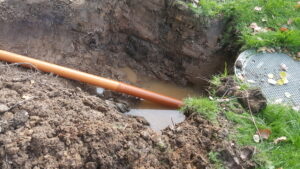
Trenching is the process of excavating a narrow channel in the ground so that pipes, cables, ducts or other services can be installed below the surface.
It is commonly required for:
- Foul water drainage
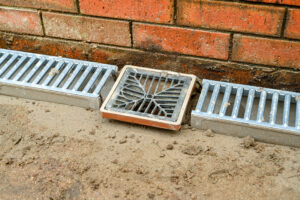
- Surface water drainage
- Water supply pipes
- Electrical cables
- Communications ducts
- Gas services
- Rainwater connections
- Sewage treatment systems
- Septic tanks and cesspits
- Soakaways
- External lighting
- Garden buildings and extensions
The dimensions of the trench will vary according to the service being installed. A shallow duct carrying a garden lighting cable will have very different requirements from a deep foul drain serving a house or commercial building.
The route must also be coordinated with foundations, roads, driveways, trees, existing utilities and future construction work.
Why is the trench route important?
Choosing the right route can make installation safer and future maintenance easier.
A poor route may pass beneath a planned extension, run too close to foundations or conflict with another service. It could also place inspection points in inaccessible areas or create unnecessary bends in a drainage run.
A well-planned route should consider:
- The shortest practical connection
- Required drainage falls
- Existing underground services
- Access for excavation equipment
- Future access for repair
- Boundaries and neighbouring land
- Trees and root systems
- Building foundations
- Roads, patios and driveways
- The final ground level
The most direct route is not always the best route. A slightly longer trench may be preferable if it avoids difficult ground, protects existing structures or provides better access.
Why do trenches need the correct depth?
Trench depth affects the safety, protection and performance of the service installed within it.
Underground pipes and cables need enough cover to protect them from surface loading, gardening work, vehicles, frost and accidental damage. However, digging unnecessarily deep can increase costs, create safety risks and make future repairs more difficult.
The required depth depends on factors such as:
- The type of service
- Pipe or cable specification
- Ground conditions
- Surface use
- Building Regulations
- Utility provider requirements
- Drainage gradient
- Risk of frost
- Proximity to other services
A pipe beneath a driveway may need greater protection than one beneath a garden. Similarly, an electrical duct, water pipe and foul drain should not automatically be installed at the same level.
What happens if a utility is too shallow?
A shallow service is more vulnerable to damage.
Possible causes of damage include:
- Garden forks and spades
- Fence posts
- Landscaping work
- Vehicle loading
- Ground movement
- Frost
- Future excavation
- Heavy construction equipment
Damage to a shallow water pipe could cause leakage and erosion. Damage to an electrical cable may create a serious safety risk. A shallow drain may deform or crack under vehicle weight if it does not have adequate cover or protection.
Correct depth reduces these risks and helps the installation remain reliable throughout its service life.
Can a trench be too deep?
Yes. Unnecessary depth increases the volume of soil that must be excavated and removed or stored.
Deep trenches may also require:
- Additional safety precautions
- Trench support
- Greater pumping if groundwater enters
- More bedding and backfill material
- Larger machinery
- More time and labour
- More complex access arrangements
For gravity drainage, starting too deep may make it difficult to maintain a suitable fall while still reaching the final connection point.
The depth should therefore be based on the service design rather than a general preference to bury everything as deeply as possible.
How does trenching affect drainage performance?
Drainage systems rely on more than simply having open pipes. Most underground foul and surface water drains depend on gravity to move water towards a sewer, treatment system, soakaway or other discharge point.
The trench establishes the pipe’s gradient, also known as its fall.
If the gradient is incorrect, wastewater may not flow as intended.
Why is the correct gradient important?
A pipe that is too flat may allow solids, grease, silt and other material to settle inside it. This can contribute to slow flow and repeated blockages.
A pipe that is excessively steep can also cause difficulties. Water may move ahead of heavier solids instead of carrying them effectively through the system.
The gradient must therefore be appropriate for the pipe size, purpose and expected flow.
During trench excavation and pipe installation, levels are checked so that the fall remains consistent. Local dips and raised sections should be avoided.
A dip in the pipe can hold standing water. A raised joint can create a restriction. Both defects may collect debris and increase the risk of blockages.
CJ Groundworks carries out drainage installation for foul water, surface water and off-mains systems, including the trenching needed to create suitable routes and levels.
Why does the trench bottom need preparation?
An excavated trench bottom is not always smooth or suitable for receiving a pipe directly.
It may contain:
- Stones
- Sharp objects
- Soft areas
- Tree roots
- Loose soil
- Water
- Uneven sections
- Old concrete or foundations
Pipes need continuous, even support. If they rest on isolated stones or unsupported joints, loads can become concentrated in small areas.
A suitable bedding material is often placed and shaped to support the pipe along its length. This helps maintain the required level and reduces the risk of cracking, deformation or settlement.
The pipe should not be expected to bridge gaps in the trench formation.
Why are trench width and working space important?
The trench must be wide enough for the service to be installed, aligned and connected correctly.
A trench that is too narrow can make it difficult to:
- Position pipes accurately
- Form watertight joints
- Compact material around the pipe
- Inspect the installation
- Maintain safe working conditions
- Adjust levels and gradients
- Install multiple ducts or services
Excessive width, however, creates more excavation, spoil and reinstatement work.
The required width depends on the pipe or duct size, depth, ground stability and installation method.
Adequate space is particularly important around joints and chambers. A connection that cannot be accessed properly may be poorly aligned or insufficiently sealed.
Why must utilities be separated?
Different underground services often have specific separation requirements.
Water, electricity, communications, gas and drainage should not simply be grouped together in one unplanned trench. Separation can reduce the risk of damage, contamination and interference.
It also makes each service easier to identify and repair.
Factors to consider include:
- Horizontal spacing
- Vertical separation
- Protective ducts
- Marker tapes
- Service colours
- Crossing points
- Access chambers
- Utility provider standards
For example, placing a water pipe immediately beside a foul drain may create a contamination risk if both systems are damaged. An electrical cable installed without clear identification may be struck during future drainage repairs.
Where services cross, the crossing should be planned and protected rather than left to chance during excavation.
What are marker tapes and service ducts?
Marker tapes are installed above underground services to warn anyone excavating in the future that a pipe or cable lies below.
They may also help identify the service type.
Ducts provide a protected route for cables or smaller service pipes. They can make future replacement or additional installation easier, depending on the design.
A duct should still be installed at the correct depth, with suitable bends and draw cords where required. A crushed, blocked or sharply curved duct may be unusable when the cable needs to be pulled through it.
What should be checked before trench excavation begins?
Before digging, the area should be assessed for existing services and other hazards.
Useful checks may include:
- Reviewing utility plans
- Inspecting existing chambers and service entries
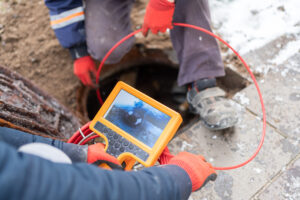
- Using cable and pipe locating equipment
- Marking known underground routes
- Checking the project drawings
- Confirming finished levels
- Assessing ground conditions
- Planning machinery access
- Identifying overhead lines
- Establishing safe spoil storage areas
Utility drawings are helpful, but they may not show every service accurately. Older private pipes, altered routes and unrecorded connections may still be present.
Trial holes or careful hand excavation may be needed in areas where services are expected.
Why are trial holes useful?
A trial hole exposes a small part of an existing service so that its actual position and depth can be confirmed.
This information can help avoid accidental damage and allows the new trench route to be adjusted if necessary.
Trial holes are particularly useful near:
- Existing houses
- Meter boxes
- Drainage chambers
- Service entry points
- Older properties
- Commercial sites
- Previous extensions
- Shared driveways
Mechanical excavation should be approached cautiously where the location of a live service is uncertain.
What are the main safety risks of trenching?
Trench excavation can be hazardous, even when the work appears straightforward.
The main risks include:
- Trench collapse
- Falls into the excavation
- Striking underground cables or pipes
- Machinery movement
- Falling spoil or materials
- Water entering the trench
- Hazardous gases
- Undermining nearby structures
- Restricted access and escape
Soil can collapse suddenly, particularly after rainfall or where the ground has been previously disturbed.
The risk generally increases as the trench becomes deeper, but shallow excavations can also collapse or cause injury.
The excavation method should reflect the depth, soil conditions, nearby structures and work being carried out.
Why should spoil be kept away from the edge?
Excavated soil adds weight to the ground beside the trench. If it is piled directly against the edge, it can increase pressure on the trench wall and contribute to collapse.
Loose soil, stones and tools may also fall into the excavation.
Spoil should be stored in a safe position that does not obstruct access, overload the edge or interfere with machinery.
The exact distance depends on the excavation and site conditions, but the principle is to avoid loading the trench unnecessarily.
When is trench support needed?
Some trenches require support systems or sloping sides to prevent collapse.
The need depends on:
- Depth
- Soil type
- Groundwater
- Weather conditions
- Nearby traffic
- Previous excavation
- Adjacent foundations
- Time the trench remains open
Support should be planned before workers enter an excavation. It should not be added only after the trench begins to move.
Safe access, such as suitable steps or ladders, may also be required.
How does groundwater affect trenching?
Groundwater or rainfall can quickly change the condition of an open trench.
Water may:
- Soften the formation
- Cause trench sides to collapse
- Wash away bedding material
- Make level control difficult
- Float lightweight pipes
- Carry silt into drainage systems
- Delay inspection and backfilling
Pumping may be needed to keep the excavation workable. However, uncontrolled pumping can remove fine soil and destabilise the surrounding ground.
Drainage work should not normally be covered while the pipe is floating, displaced or sitting in loose saturated material.
The trench may need to be cleaned and the bedding reinstated before work continues.
Why is backfilling just as important as excavation?
Once a pipe, cable or duct has been installed, the trench must be refilled carefully.
Backfilling provides support and protection. Poor backfilling can damage the service immediately or allow it to move later.
The first material placed around a drainage pipe is particularly important. It should support the sides of the pipe without displacing it or damaging the joints.
Large stones, concrete fragments and unsuitable excavated material should not be dropped directly onto vulnerable services.
A typical backfilling sequence may include:
- Checking alignment, levels and joints
- Placing suitable material around the service
- Compacting carefully beside the pipe or duct
- Adding protective layers where specified
- Installing marker tape
- Refilling the remainder in controlled layers
- Compacting to reduce future settlement
- Reinstating the surface
The exact sequence varies with the service, surface and specification.
What happens if a trench is not compacted properly?
Loose backfill settles over time.
This can cause:
- Sunken lawns
- Cracked paving
- Depressions in driveways
- Water collecting above the trench
- Pipes losing their gradient
- Damaged joints
- Uneven roads or paths
Settlement may continue long after the rest of the construction project has been completed.
Compaction should be carried out in manageable layers rather than placing all the soil back at once and compacting only the surface.
Care is needed around pipes and ducts so that compaction equipment does not damage or move them.
Why does trenching matter for off-mains drainage?
Rural and other properties without a mains sewer may rely on a septic tank, cesspit or sewage treatment plant.
These systems require trenches for inlet pipes, outlet pipes, electrical services and, in some cases, drainage fields or discharge arrangements.
Incorrect levels can prevent wastewater from reaching the system by gravity. The property may then need pumping equipment or a redesigned layout.
Trenching for an off-mains system may need to accommodate:
- Foul drainage from the property
- Ventilation pipework
- Electrical ducts
- Treated effluent outlets
- Inspection and sampling points
- Drainage field distribution pipes
- Alarm cables
- Access for maintenance
CJ Groundworks installs septic tanks, cesspits and sewage treatment plants for properties that require suitable off-mains drainage solutions.
The complete route should be planned before excavation begins so that the system operates correctly and remains accessible.
Why is access for future maintenance important?
Underground services will eventually need inspection, cleaning, repair or replacement.
Good trench and system design helps preserve access through:
- Inspection chambers
- Rodding points
- Accessible duct ends
- Clearly marked routes
- Sensible pipe layouts
- Avoidance of unnecessary bends
- Accurate installation records
Burying a drain without suitable access may make a future blockage difficult to clear.
Likewise, a service duct that ends beneath a patio without a chamber or identifiable marker may provide little practical benefit.
Taking photographs and recording measurements before the trench is backfilled can be extremely useful. These records can show where services cross, how deep they are and where connections were made.
What problems can result from poor trenching?
Poorly planned or executed trenching can lead to immediate and long-term problems.
These may include:
- Blocked drains
- Cracked or deformed pipes
- Leaking joints
- Incorrect drainage falls
- Damaged utility cables
- Contaminated water supplies
- Sunken ground
- Waterlogged trenches
- Difficult maintenance access
- Conflicts with later building work
A common problem is localised settlement. A drainage pipe may initially be installed at the right fall, but poorly compacted bedding or backfill can allow part of it to sink.
This creates a low point where water and waste collect. The drainage may then block repeatedly, even though cleaning temporarily restores flow.
Correct trench preparation reduces the chance of such hidden defects developing.
When should professional trenching be considered?
Professional excavation is particularly valuable when:
- The trench is deep
- Several services must be coordinated
- Drainage falls are critical
- Existing utilities are present
- Access is restricted
- The ground is unstable
- A road or driveway must be crossed
- The work is close to foundations
- Large volumes of spoil must be managed
- Off-mains drainage is being installed
A suitable contractor can select machinery for the available access, control levels and coordinate excavation with pipe installation.
Professional groundworks services can also help manage site clearance, spoil removal, backfilling and surface reinstatement as part of the wider project.
Frequently Asked Questions
How deep should a utility trench be?
The correct depth depends on the service, ground conditions, surface loading and applicable standards. Water pipes, electrical cables and drainage pipes have different requirements, so one standard trench depth should not be used for every utility.
Can different utilities share the same trench?
In some situations, services can follow a shared route, but they may require specific horizontal or vertical separation, protective ducts and marker tapes. The requirements of each utility provider and the installation design should be followed.
Why do drainage trenches need a fall?
Gravity drainage relies on a controlled fall to move water and waste towards the connection or treatment system. An incorrect gradient can cause standing water, deposited solids and recurring blockages.
Can excavated soil be used to backfill a trench?
Some excavated material may be suitable for general backfill, but large stones, organic soil, rubble and other unsuitable materials should not be placed directly around pipes or cables. The installation specification should determine which materials can be reused.
How can underground services be found before digging?
Utility plans, service drawings, locating equipment, inspection chambers and trial holes can all help identify underground services. Plans should not be assumed to show every route or depth precisely.
Trenching supports the whole underground system
Trenching is essential because it creates the conditions in which utilities and drainage can work safely and reliably.
The excavation determines where each service runs, how deep it sits and how it is protected. For drainage, it also establishes the gradient needed to carry water and waste. Proper bedding supports pipes, while controlled backfilling and compaction prevent movement and surface settlement.
A trench that is dug quickly without accurate planning can create hidden problems that are expensive to correct once buildings, roads or landscaping have been completed. Careful route selection, service detection, level control and reinstatement are therefore just as important as the pipes or cables placed inside it.
CJ Groundworks provides excavation, trenching and underground service preparation for domestic, commercial, industrial and rural projects across Sussex, East Sussex, Surrey and Kent. With more than 35 years of experience, the family-run team can coordinate groundworks with drainage installations, foundations and off-mains systems.
Call 0140 373 3214 or email chris@cjgroundworks.com to discuss trenching for your project.
Find out more: CJ Groundworks