Introduction
If you are planning a new build or extension, you may be asking, what is raft footing and how does it differ from traditional strip foundations? Foundations are one of the most critical elements of any construction project, particularly in areas such as Surrey, Sussex and Kent where ground conditions can vary significantly.
Understanding what is raft footing helps homeowners and developers choose the right structural solution, ensuring long-term stability and compliance with UK Building Regulations.
At CJ Groundworks (https://cjgroundworks.com/), we install both raft and strip foundations across the South East, tailoring each solution to site conditions and structural requirements.
What Is Raft Footing?
To answer clearly, what is raft footing?
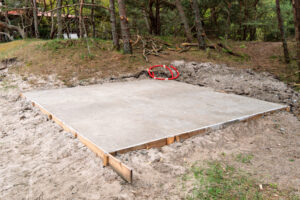
A raft footing is a reinforced concrete slab that supports the entire footprint of a building. Unlike individual strip footings that sit beneath load-bearing walls, a raft footing distributes the building load evenly across the ground.
In simple terms, when someone asks what is raft footing, the answer is: it is a foundation system designed to spread weight across a wider area to reduce pressure on the soil.
For technical background, see: https://en.wikipedia.org/wiki/Raft_foundation
How Raft Footings Work
Understanding what is raft footing also involves looking at how the system functions structurally.
A raft footing:
Covers the full building footprint
Incorporates steel reinforcement mesh
May include thickened edge beams or ribs
Reduces differential settlement risk
Because the slab acts as a single structural unit, loads are shared evenly. This makes raft footings particularly effective where soil bearing capacity is low or inconsistent.
In clay-heavy regions of Surrey and Sussex, this can be a major advantage.
What Is Raft Footing Compared to Strip Foundations?
Strip Foundations
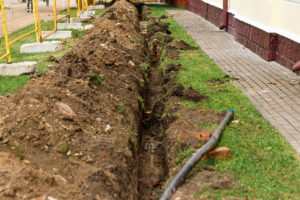
Strip foundations consist of concrete trenches placed beneath load-bearing walls. They transfer structural loads to deeper, stable soil layers.
Strip foundations are often suitable where:
Ground conditions are stable
Soil bearing capacity is sufficient
Excavation depth is manageable
Raft Footings
By contrast, when evaluating what is raft footing, you will find that raft systems:
Spread load evenly across the site
Reduce excavation depth in some cases
Perform better on soft or shrinkable clay soils
Offer increased protection against uneven settlement
In many extension projects where soil conditions are uncertain, a raft footing may be preferred over deep strip footing alternatives.
When Is a Raft Footing Recommended?
You may consider a raft footing if:
Soil bearing capacity is low
The site contains made ground
Clay shrinkage risk is present
Deep excavation would be costly or impractical
Understanding what is raft footing helps property owners avoid over-engineering or under-designing foundation systems.
Structural engineers will assess ground investigations and load calculations before recommending the appropriate system.
Construction Process for Raft Footings
When homeowners ask what is raft footing in practical terms, they often want to understand the installation process.
Typical steps include:
Excavation to formation level
Installation of compacted hardcore sub-base
Sand blinding layer
Damp proof membrane placement
Reinforcement installation
Concrete pour
All works must comply with Building Regulations Part A (Structure). Local Building Control will inspect reinforcement and excavation depth before concrete is poured.
Proper coordination between engineer and contractor ensures that the final raft footing detail matches approved drawings.
Benefits of Raft Footings in the South East
Ground conditions across Kent, Surrey and Sussex often include shrinkable clay. Seasonal moisture changes can cause movement in traditional strip foundations.
Choosing the correct foundation system after understanding what is raft footing can provide:
Greater structural stability
Reduced cracking risk
Improved load distribution
Potential cost savings on deep excavation
For domestic extensions and new builds alike, these benefits can make a significant difference over time.
Why Professional Installation Matters
Incorrect foundation installation can result in subsidence, cracking and regulatory complications. Experienced contractors ensure reinforcement, slab thickness and ground preparation align with engineer specifications.
CJ Groundworks delivers professionally installed raft systems across Surrey, Sussex, East Sussex and Kent. If you are researching what is raft footing, working with a trusted specialist ensures your foundation performs as designed.
Frequently Asked Questions
Q1: Is a raft footing more expensive than strip foundations?
A1: It can have higher material costs, but savings may be achieved through reduced excavation and improved structural performance.
Q2: Can raft footings be insulated?
A2: Yes. Modern insulated raft systems include thermal insulation to meet energy efficiency requirements under Part L.
Q3: Are raft footings suitable for extensions?
A3: Yes, particularly where soil conditions are uncertain or clay shrinkage risk is present.
Choosing the right foundation system is essential for any construction project. If you are still asking what is raft footing and whether it is right for your property, speak to experienced professionals.
Call 0140 373 3214
Email chris@cjgroundworks.com