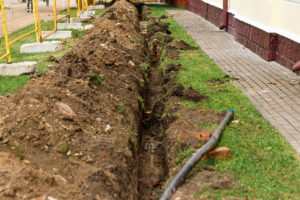
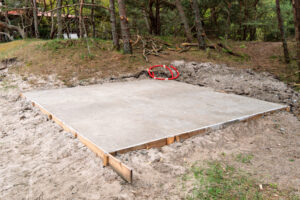
A strip foundation is one of the most widely used foundation types in the UK, popular in both residential and small-scale commercial construction. However, it is not suitable for every site, and choosing the wrong foundation type can lead to structural issues, costly repairs, and project delays. Understanding when a strip foundation is appropriate is essential for builders, developers, and homeowners.
In this guide, CJ Groundworks explains how ground conditions influence foundation choice, when strip foundations are most effective, and how our specialist groundwork team ensures your build starts on the strongest possible footing.
What Is a Strip Foundation?
A strip foundation is a shallow foundation system that distributes the load of a building through long, narrow concrete footings. These footings typically sit below external and load-bearing walls, providing stable support where ground conditions allow.
Strip foundations are most suitable for:
- Low-rise residential properties
- Extensions and small structures
- Projects with adequate soil strength
They are commonly used alongside reinforced concrete footings to improve structural performance.
Key Ground Condition Factors That Determine Suitability
Choosing a strip foundation depends heavily on the characteristics of the soil beneath your project. Below are the main factors CJ Groundworks assesses before recommending this method.
1. Adequate Ground Bearing Capacity
Strip foundations require soil with sufficient natural strength to support building loads without excessive settlement. Suitable soil types typically include:
- Firm clay
- Dense sand
- Stable gravel
- Mixed soils with good compaction
Our team conducts soil condition assessments to verify whether the natural ground can support shallow foundation systems.
2. Uniform Soil Conditions Across the Site
Strip foundations perform best when the soil conditions remain consistent across the footprint of the building. If soil types vary significantly, settlement can become uneven, increasing the risk of cracking and movement.
In such cases, alternative solutions like trench fill foundations or piled systems may be more appropriate.
3. Low Risk of Ground Movement
Shrinkable clay, high moisture variation, and tree proximity all increase the risk of ground movement. Strip foundations are more vulnerable to movement compared with deep systems, so they should only be used where:
- Moisture content is stable
- Roots will not affect the soil
- The site is not prone to heave or subsidence
CJ Groundworks evaluates all risk factors before recommending residential foundation solutions.
4. Suitable Excavation Depth
Strip foundations become impractical when excavation depths need to exceed safe or economical limits. Deep trenches increase:
- Labour costs
- Concrete volumes
- Waste removal requirements
Where deeper excavation is required, a trench fill or pile foundation may offer better long-term value.
When a Strip Foundation Is the Best Choice
A strip foundation is often ideal when the project features:
- A low-rise building with moderate structural loads
- Good natural ground conditions with strong bearing capacity
- Simple, linear wall layouts
- Easy excavation access
- Minimal risk from ground movement
These foundations are cost-effective, straightforward to install, and compliant with UK building regulation foundation standards when designed correctly.
When You Should Avoid a Strip Foundation
Strip foundations are not recommended when:
- The soil is weak, loose, or highly shrinkable
- Trees or large vegetation create root or moisture risks
- There is a history of subsidence on or near the site
- The building has heavy structural loads
- Excavation depth becomes excessive
In these cases, CJ Groundworks may recommend alternative systems such as trench fill foundations, raft foundations, or deep foundation solutions.
How CJ Groundworks Ensures the Right Foundation Choice
Our team provides expert guidance from the initial ground investigation through to final installation. We offer:
- Full ground investigation reports
- Professional excavation and groundwork delivery
- Design and construction of reinforced concrete footings
- Compliance checks with UK building regulations
- Structural coordination on new builds and extensions
- Complete specialist groundwork services
A strip foundation is a reliable and cost-effective option when ground conditions allow, but it is not suitable for every site. Soil strength, movement risks, and excavation requirements all play a critical role in determining whether this shallow design is appropriate. CJ Groundworks provides expert assessments and high-quality installation to ensure your project starts with a strong, compliant foundation.
For foundation advice, site assessments or installation, contact CJ Groundworks:
Phone: 0788 175 7877
Email: chris@cjgroundworks.com | henry@cjgroundworks.com
Website: https://cjgroundworks.com/services/building-foundations/
Frequently Asked Questions
Q1: How deep should a strip foundation be in the UK?
Depth varies depending on soil type and building regulations, but most strip foundations range from 450mm to 1m, with adjustments for clay, frost, and trees.
Q2: Are they suitable for house extensions?
Yes, provided the ground conditions are stable and the structural loads are appropriate. A soil assessment is recommended before proceeding.
Q3: Do strip foundations work on clay soil?
They can, but shrinkable clay requires careful assessment. In many cases, deeper foundations or alternative systems may be safer.