Drainage problems do not always begin with an overflowing toilet or sewage appearing in the garden. In many cases, the warning signs develop gradually. A sink may start draining more slowly, an unpleasant smell may come and go, or a patch of ground outside may remain wet even during dry weather.
Recognising the early signs of a drainage problem can help prevent a minor issue from becoming a more disruptive and expensive repair. Blockages, cracked pipes, root intrusion, poor falls and collapsed drains can all interfere with the movement of wastewater or surface water. The symptoms may initially seem small, but they often become more frequent as the underlying fault worsens.
Some drainage issues can be resolved through cleaning or jetting. Others require a detailed inspection and repair. Understanding what the warning signs mean can help you decide when a simple household response may be appropriate and when professional investigation is needed.
What are the earliest warning signs of a drainage problem?
The first indication of a drainage issue is often a change in how water leaves a sink, bath, shower or toilet.
Water should generally drain away steadily without rising, bubbling or making unusual noises. If it begins moving more slowly than normal, there may be a build-up inside the pipe.
Common early warning signs include:
- Water taking longer to drain from sinks, baths or showers
- Toilets filling higher than usual before flushing away
- Water backing up into another appliance
- Gurgling sounds from plugholes or toilet bowls
- Unpleasant smells around drains
- Frequent use of plungers or drain-cleaning products
- Outdoor gullies overflowing during normal use
- Several fixtures draining slowly at the same time
A problem affecting only one plughole may be caused by a local blockage close to that appliance. Hair, soap, grease and food waste are common causes.
When several appliances are affected, the obstruction may be further along the drainage system. A blockage in a shared pipe or underground drain can restrict flow from multiple areas of the property.
Why is slow drainage important?
Slow drainage is easy to ignore, especially when the water is still disappearing eventually. However, a pipe rarely becomes slow without a reason.
Material may be collecting on the internal surface of the pipe and gradually reducing its usable diameter. As the opening becomes narrower, wastewater takes longer to pass through.
Common causes include:
- Hair and soap residue in bathroom pipes
- Fat, oil and food debris in kitchen drainage
- Limescale or mineral deposits
- Sanitary products or wipes
- Building debris entering a drain
- Roots growing into damaged pipe joints
- A pipe that has moved or partially collapsed
A one-off slow sink may not indicate a serious underground issue. Repeated slow drainage, particularly after the pipe has been cleared, deserves closer attention.
Why do drains make gurgling noises?
Gurgling noises are created when air is displaced or trapped within the drainage system.
As water travels through a clear pipe, air should move freely through the drainage and ventilation system. When there is an obstruction, water may struggle to pass the restricted point. Air becomes trapped behind it and escapes through nearby plugholes or toilets.
You may hear gurgling from:
- Kitchen sinks
- Bathroom basins
- Showers
- Baths
- Toilets
- Utility room drains
- External gullies
The sound may happen while the appliance is being used or shortly afterwards. For example, flushing a toilet may cause the nearby basin to gurgle. Emptying a bath may make the toilet water move.
This interaction can indicate that the appliances share a restricted section of pipework.
Can gurgling be caused by poor ventilation?
Not every gurgling sound is caused by a blockage. Problems with drainage ventilation can create similar symptoms.
Vent pipes allow air to enter the system and help prevent pressure changes as wastewater moves through the pipes. If a vent is blocked, damaged or incorrectly installed, water may pull air through traps and plugholes instead.
A professional drainage investigation can help determine whether the cause is an obstruction, a ventilation fault or a combination of both.
Why do drains smell unpleasant?
A persistent sewage or rotten-egg smell is one of the clearest signs that something may be wrong with the drainage system.
The smell can enter a property when wastewater is not moving away properly or when gases escape through damaged or poorly sealed pipework.
Possible causes include:
- A build-up of food, grease or organic material
- A blocked or slow-moving drain
- A dry water trap
- Damaged pipe joints
- A cracked underground drain
- A poorly sealed toilet connection
- An issue with a septic tank, cesspit or treatment plant
- Wastewater sitting in a pipe with an inadequate fall
The water held in a sink, shower or toilet trap normally creates a barrier against drainage gases. If the trap dries out or is repeatedly siphoned by pressure changes, smells may enter the room.
Cleaning the plughole may resolve a local build-up. However, odours that return quickly, affect several rooms or become stronger after using water may indicate a more significant drainage issue.
Why should sewage smells not be ignored?
Sewage smells are unpleasant, but they can also indicate that wastewater or drainage gases are escaping where they should not.
If a pipe is cracked beneath a floor or outside the property, wastewater can enter the surrounding soil. This may contribute to dampness, contamination, pest activity and deterioration around the damaged section.
The location, timing and intensity of the smell can provide useful clues. It is worth noting whether it is stronger near a particular appliance, inspection chamber or outdoor drain.
What does water backing up mean?
Water backing up is a stronger warning that the normal flow through the drainage system has been obstructed.
You might notice:
- Water rising in the shower when the toilet is flushed
- The kitchen sink filling when the washing machine empties
- Wastewater appearing in a bath or shower tray
- A toilet bowl rising close to the rim
- An outside gully overflowing
- Water appearing around an inspection chamber cover
When wastewater emerges from another outlet, it usually means that it cannot pass through the drainage system quickly enough. It therefore seeks the next available escape point.
Stop using affected appliances where possible. Continuing to run taps, flush toilets or operate washing machines can add more water to the blocked system and increase the risk of internal flooding.
Is an overflowing external drain always a blockage?
An overflowing external gully is commonly associated with a blockage, but there may be other explanations.
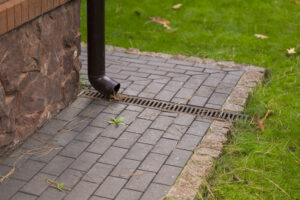
Heavy rainfall can overwhelm surface water drainage if the system is undersized, damaged or poorly maintained. Leaves, silt and debris can also restrict the gully itself.
If the overflow happens when toilets, sinks or appliances are used, it is more likely to involve the foul drainage system. If it occurs only during heavy rain, the problem may be connected with surface water drainage.
CJ Groundworks undertakes drainage work for foul and surface water systems, including investigation, repairs, jetting and drainage improvements.
What external signs can indicate underground drain damage?
Underground pipes are hidden, so the symptoms of damage often appear in the ground, walls or surrounding landscaping.
External warning signs can include:
- Ground that remains wet in dry weather
- Unexplained puddles or boggy areas
- Localised areas of unusually green grass
- Subsidence or sunken paving
- Cracks around drains or inspection chambers
- Sewage smells in the garden
- Rodent activity
- Wastewater appearing at ground level
- Repeated blockages in the same area
A leaking foul drain can provide additional moisture and nutrients to nearby vegetation. This may create a patch of grass that grows faster or appears greener than the surrounding lawn.
A damaged surface water drain may cause waterlogging, erosion or settlement. The escaped water can wash fine material away from beneath paving, paths or structures.
Why can paving or soil begin to sink?
If a drainage pipe leaks underground, the escaping water can gradually move or wash away the soil surrounding it. This can create a void beneath paving, driveways or garden areas.
The surface may then begin to dip, crack or collapse.
Sunken ground does not always mean that a drain has failed. Poorly compacted backfill, tree roots and general ground movement can produce similar symptoms. However, settlement that appears close to a drain run or inspection chamber should be investigated.
Ignoring a developing void can allow the affected area to become larger and potentially damage nearby structures.
What are the signs of a surface water drainage problem?
Not all drainage problems involve toilets or household wastewater. Surface water systems collect rainfall from roofs, patios, driveways and other hard surfaces.
Possible signs of a surface water problem include:
- Water pooling around the property
- Gutters overflowing despite being clear
- Rainwater pipes discharging slowly
- Standing water on patios or driveways
- Soil washing away during rainfall
- Water flowing towards walls or doorways
- A soakaway taking a long time to empty
- Inspection chambers filling during moderate rain
Persistent water around a building can contribute to dampness and deterioration. It may also make gardens, paths and access areas difficult to use.
A blocked pipe may be responsible, but the system may also be unable to cope with the amount of water reaching it. Changes to the property, such as a new extension, driveway or patio, can increase runoff and place additional demand on existing drainage.
Why might a soakaway stop working?
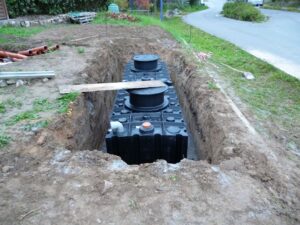
A soakaway allows surface water to disperse gradually into the surrounding soil. Its performance depends on the ground being able to absorb that water.
Over time, a soakaway may become less effective because of:
- Silt entering the system
- Soil compaction
- Root intrusion
- Damage to pipework
- Poorly draining ground
- A high groundwater level
- Increased runoff from new hard surfaces
- Inadequate original design
If water backs up towards the property or remains in the system for long periods, the soakaway and connecting pipework may need to be assessed.
When does a recurring blockage suggest a bigger problem?
An occasional local blockage may be caused by something that has entered the pipe. If it is properly removed and the drainage returns to normal, no further action may be needed.
Recurring blockages are different.
If the same drain blocks repeatedly, there may be a structural issue that is catching debris or restricting flow. Simply clearing the obstruction may restore temporary use without correcting the cause.
Possible underlying faults include:
- Cracked pipes
- Displaced joints
- Root intrusion
- Partial collapse
- Poor pipe gradients
- Deformed plastic pipes
- Rough internal surfaces
- Incorrect connections
- Construction materials left inside the drain
The timing of the blockage can also provide clues. A drain that blocks after heavy rain may be affected by water ingress, silt or an overloaded system. A kitchen drain that repeatedly blocks may have a continuing grease problem. A drain serving the whole property may have a restriction in the main run.
Are chemical drain cleaners a long-term solution?
Chemical products may break down some local obstructions, but they do not repair cracked, displaced or collapsed pipes.
Frequent use can also make professional work more hazardous if chemicals remain in the drain. Some products may damage particular materials or seals when used incorrectly.
A plunger or suitable manual cleaning method may be reasonable for a minor local blockage. If the problem returns, affects multiple fixtures or causes wastewater to back up, investigation is usually more useful than repeatedly treating the symptom.
What is a CCTV drain survey?
A CCTV drain survey uses a specialist camera to inspect the inside of drainage pipes.
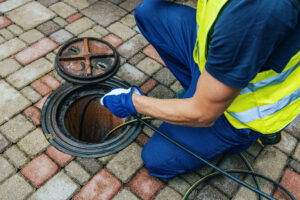
The camera is passed through the system from an access point, such as an inspection chamber. It allows the operator to assess pipe condition and identify defects that cannot be seen from the surface.
A survey may reveal:
- Cracks
- Collapsed sections
- Displaced joints
- Root intrusion
- Scale and debris
- Standing water
- Poor falls
- Obstructions
- Unauthorised or incorrect connections
A CCTV drain survey can be particularly helpful when a blockage keeps returning, a property is being extended or there are unexplained signs of underground leakage.
The findings help determine whether the drainage needs cleaning, a local repair, relining, excavation or replacement.
When should you arrange professional drainage help?
Professional assistance should be considered when:
- Several appliances are draining slowly
- Wastewater is backing up
- A blockage keeps returning
- Sewage smells persist after cleaning
- An inspection chamber is full
- Water is escaping around a drain
- Ground or paving is sinking
- Drainage problems are affecting an extension project
- The cause cannot be identified safely
- An off-mains drainage system is not working correctly
Fast action is particularly important where sewage is entering a building or garden. Contact with wastewater should be avoided, and affected areas should be kept away from children and pets.
A drainage contractor can assess the pattern of symptoms, inspect accessible chambers and determine whether jetting, surveying or repair work is appropriate.
What happens during a professional drainage investigation?
The exact process depends on the symptoms and site, but it may include:
- Discussing when and where the problem occurs
- Checking internal and external drainage points
- Opening accessible inspection chambers
- Testing how water moves through the system
- Removing obvious blockages
- Cleaning the pipe with high-pressure jetting where appropriate
- Carrying out a CCTV inspection
- Locating damaged sections
- Recommending a repair or maintenance plan
Not every drainage problem requires excavation. Blockages caused by grease, scale, roots or debris may be removed using suitable cleaning equipment.
Where a pipe is cracked or collapsed, excavation may be necessary to expose and replace the affected section. The repair method should be based on the defect, pipe material, access and surrounding ground conditions.
How can drainage problems be prevented?
Some problems develop because of structural damage or ground movement and cannot be prevented through everyday maintenance alone. However, sensible use can reduce avoidable blockages.
Helpful measures include:
- Keep cooking fats and oils out of sinks
- Remove food scraps before washing dishes
- Use hair traps in showers and baths
- Avoid flushing wipes and sanitary products
- Keep external gullies clear of leaves and silt
- Inspect drainage after major building work
- Address small leaks and slow drainage promptly
- Maintain septic tanks, cesspits and treatment plants properly
- Avoid planting unsuitable trees directly over drain runs
Property alterations should also take existing drainage into account. New extensions, garden rooms, driveways and patios can affect access, loading and surface water flow.
Where building work is planned, identifying and assessing the drains beforehand can reduce the risk of accidentally building over a damaged system.
Frequently Asked Questions
Can one slow sink mean there is an underground drainage problem?
A single slow sink is often caused by a local blockage in the trap or nearby waste pipe. If several appliances are slow, the problem returns after cleaning or water backs up elsewhere, the issue may be further along the drainage system.
Why does my toilet water rise before draining away?
A temporary rise can indicate that water is struggling to pass through a restriction. If the level rises unusually high, drains slowly or affects other appliances, there may be a blockage in the toilet outlet or shared drain.
Are bad drain smells dangerous?
Persistent smells can indicate escaping drainage gases or wastewater. The source should be investigated, particularly if the smell affects several rooms, becomes stronger after using water or is accompanied by dampness or slow drainage.
Who is responsible for a blocked drain?
Responsibility depends on where the blockage is located and whether the drain serves one property or several. A homeowner is generally responsible for private drainage within the property boundary, while shared sewers may be the responsibility of the local water company.
Can tree roots damage drainage pipes?
Yes. Roots can enter through cracked pipes or displaced joints and grow inside the drainage system. They may restrict flow, catch waste and worsen the original defect over time.
Acting early can prevent greater damage
Slow drainage, gurgling noises and occasional smells may appear minor, but they can provide early warning of a developing blockage or damaged pipe.
More serious signs include wastewater backing up, overflowing chambers, persistent wet ground, sunken paving and repeated blockages. These symptoms should not be repeatedly cleared without investigating why they are happening.
The most suitable solution depends on the cause. Some drainage problems need cleaning or jetting, while others require a CCTV survey, local repair or replacement pipework. Identifying the fault accurately helps avoid unnecessary work and reduces the likelihood of the problem returning.
CJ Groundworks provides professional drainage investigation, drain jetting, repairs and groundworks services across Sussex, East Sussex, Surrey and Kent. The family-run business has more than 35 years of experience working with domestic, commercial, industrial and rural drainage systems.
Call 0140 373 3214 or email chris@cjgroundworks.com to discuss a drainage concern.
Find out more: CJ Groundworks