Buying a property with off-mains drainage can be perfectly manageable, but it is important to understand exactly what system serves the property before you commit. Unlike a property connected to the public sewer, an off-mains home relies on a private system to manage wastewater. This may be a septic tank, cesspit or sewage treatment plant.
The key issue for buyers is responsibility. Once you own the property, you may also inherit the responsibility for the system, its maintenance, its access, its performance and any problems that were missed during the purchase. A standard home buyer survey may not inspect private drainage in detail, so it is sensible to arrange specialist checks before exchange.
For rural homes, older properties, commercial premises and land-based developments across Sussex, East Sussex, Surrey and Kent, off-mains drainage is common. CJ Groundworks provides practical support for septic tank installation, cesspit installation, sewage treatment plants, drainage systems and CCTV drain surveys.
What Is Off-Mains Drainage?
Off-mains drainage is used where a property is not connected to the public sewer. Instead, wastewater from toilets, sinks, baths, showers, washing machines and dishwashers is managed on or near the property.
Common off-mains drainage systems include septic tanks, cesspits and sewage treatment plants. A septic tank separates solids from wastewater and usually discharges liquid effluent to a drainage field. A sewage treatment plant treats wastewater to a higher standard before discharge, subject to the correct rules and site conditions. A cesspit is a sealed holding tank that stores wastewater until it is emptied.
The Environment Agency’s general binding rules state that septic tanks and small sewage treatment plants must be operated in a way that does not cause pollution, and septic tank effluent must not be discharged directly into a watercourse. (GOV.UK)
Why Buyers Need To Be Careful
Off-mains drainage is not automatically a problem, but an unsuitable, damaged or non-compliant system can become expensive. A buyer may discover after completion that the tank is undersized, difficult to access, discharging incorrectly, overflowing, damaged or shared with a neighbouring property.
That can affect maintenance costs, future saleability and everyday use of the property. It can also create unpleasant smells, slow drainage, wet ground, pollution concerns and disputes over access or responsibility.
Before buying a property with off-mains drainage, your aim is to answer five basic questions: what system is installed, where it is located, what condition it is in, whether it is compliant, and what it will cost to maintain or replace.
Check What Type of System the Property Has
The first step is to confirm what type of off-mains drainage system serves the property. Do not rely on vague descriptions such as “private drainage” or “septic system”. You need to know whether it is a septic tank, cesspit, sewage treatment plant or another arrangement.
Each system works differently. A septic tank treats wastewater partly and usually needs a drainage field. A cesspit does not treat wastewater and must be emptied regularly because it is a sealed storage tank. A sewage treatment plant has mechanical or electrical components and usually needs servicing.
Ask the seller for the system type, installation date, location, discharge point, maintenance records and any manuals or warranties. A 2026 buyer guide from a sewage treatment manufacturer also highlights the importance of checking the system type, regulatory position, emptying history, drainage field condition and whether the system is shared before exchange. (Premier Tech Aqua)
Check Whether the System Is Shared
Some off-mains drainage systems serve more than one property. This is common in rural areas, converted buildings and older homes. If the system is shared, you need to know who owns it, who is responsible for repairs, who pays for emptying and who has access rights.
Shared systems can work well if everything is clearly documented. Problems arise when there is no written agreement, unclear boundaries or disagreement over costs. A solicitor should check the title documents, rights of access and any maintenance responsibilities.
You should also check whether the system is large enough for all connected properties. If several homes use an undersized or ageing system, you may face future repair or replacement costs.
Check the Location of the Tank and Pipework
Buyers should know where the tank, pipework, inspection chambers, drainage field and discharge route are located. This matters for maintenance, future building work, landscaping, access and safety.
A tank hidden beneath a patio, driveway, extension or dense vegetation can be difficult and expensive to maintain. Poor access can make emptying harder, while unknown pipe routes can cause problems if you plan to build an extension, install a driveway or alter the garden.
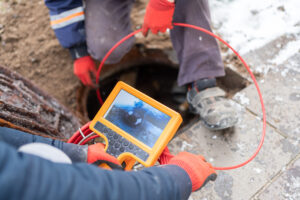
Ask for a drainage layout plan if one is available. If not, a CCTV drain survey or specialist drainage inspection can help identify the route and condition of the system.
Arrange an Off-Mains Drainage Survey
A specialist off-mains drainage survey is one of the most important checks before buying. A normal property survey may not inspect the drainage system in enough detail. Some standard surveys may only lift accessible covers and make limited observations.
A home buyer drainage survey can inspect the tank, pipework, access points and visible drainage layout. It may also identify cracked pipes, root ingress, displaced joints, blockages, signs of backfall, poor flow, high liquid levels or evidence of system failure.
Drainage specialists and legal commentators commonly recommend a dedicated home buyer drainage survey because standard property surveys are usually limited in how far they assess private drainage. (Labrums Solicitors)
Ask for Emptying and Maintenance Records
Maintenance records tell you how the system has been looked after. Ask when the tank was last emptied, how often it is emptied, who carries out the work and whether there are service reports.
Septic tanks and cesspits need regular emptying. Sewage treatment plants usually need servicing as well as desludging because they may have pumps, blowers or other mechanical parts. If there are no records, this does not always mean the system is failing, but it increases uncertainty.
A neglected system may already be full, blocked or damaged. If the seller cannot provide clear records, arrange an inspection before exchange and consider whether any findings should affect the purchase price or conditions.
Check for Signs of Drainage Problems
A buyer can often spot warning signs during viewings, although these should not replace a professional survey. Walk around the garden, access routes and the area where the tank or drainage field may be located.
Look for wet patches, unusually lush grass, sunken ground, sewage smells, standing water, overflowing chambers or slow-draining toilets and sinks. Ask whether the system has ever backed up, flooded, needed emergency emptying or caused problems after heavy rain.
Inside the property, gurgling drains, slow flushing toilets and persistent odours can also indicate drainage issues. These symptoms do not always mean the off-mains system has failed, but they should be investigated.
Check the Drainage Field
If the property has a septic tank, the drainage field is especially important. A drainage field allows treated effluent to disperse into the ground. If it is damaged, undersized or saturated, the system may not work properly.
The Environment Agency guidance explains that a septic tank or small sewage treatment plant discharging to ground must discharge through a drainage field, and not simply to an open watercourse. (GOV.UK)
A failed drainage field can be costly and disruptive to replace. Buyers should check where it is located, whether it is within the property boundary, whether vehicles have driven over it and whether the ground shows signs of saturation. Trees, extensions, patios and hardstanding can all affect drainage field performance and access.
Check Compliance With Current Rules
Compliance is a key part of buying a property with off-mains drainage. In England, small sewage discharges may be covered by the Environment Agency’s general binding rules if the system meets the relevant conditions. If the system does not meet those rules, changes may be needed or an environmental permit may be required. (GOV.UK)
One important point is that septic tanks must not discharge effluent directly to a watercourse. If an older property still has a septic tank pipe running to a ditch, stream or other surface water route, the system is likely to need upgrading or replacing. (GOV.UK)
Buyers should ask the seller for evidence of compliance and discuss the position with their solicitor. A specialist inspection can also help identify obvious concerns, although legal advice should come from a qualified conveyancer or solicitor.
Check Whether a Permit Is Needed
Not every off-mains drainage system needs an environmental permit. Some systems can operate under the general binding rules if they meet the conditions. However, a permit may be needed if the discharge falls outside those rules, the site is sensitive or the system is non-standard.
The GOV.UK guidance states that if a system does not meet the general binding rules, changes may be required, and a permit should only be applied for where the general binding rules cannot be met. (GOV.UK)
As a buyer, you should not leave this question until after completion. Ask the seller whether a permit exists or is required, and make sure your solicitor reviews any relevant documents.
Check Capacity and Suitability
The system must be suitable for the property. A tank installed decades ago for a small cottage may not be suitable if the property has been extended, converted or now has more bedrooms and bathrooms.
Capacity matters because the system needs to handle the volume of wastewater produced. If the tank is too small, it may require more frequent emptying or may not operate correctly. For a sewage treatment plant, the system also needs to suit the number of occupants and property use.
This is particularly important for commercial properties, holiday lets, rural businesses, workshops, farms and properties with annexes. More people and more facilities usually mean greater wastewater demand.
Check Access for Emptying and Repairs
Every off-mains drainage system needs access for maintenance. Tankers need to be able to reach or safely service the tank. Engineers may also need access for inspections, repairs, servicing or future replacement.
If access is awkward, across neighbouring land or blocked by landscaping, maintenance can become more complicated. Buyers should check whether rights of access are recorded, especially if the tank or drainage field is outside the immediate garden or shared with another property.
Access is not just a practical detail. Poor access can increase costs, delay emergency work and reduce the appeal of the property when you sell in future.
Check Future Plans Before Buying
If you plan to extend, build a garage, install a garden room, landscape the garden or create a new driveway, you need to know how the off-mains drainage system may be affected.
You should not build over tanks, access covers, pipework or drainage fields without proper advice. Heavy vehicles and construction work can damage underground systems. Changing ground levels can also affect drainage performance.
Before committing to a property, compare your future plans with the drainage layout. This can help avoid buying a home where your intended works are difficult, expensive or impractical.
CJ Groundworks supports related groundworks, foundations, drainage and concrete base preparation. More information is available on the groundworks and building foundations pages.
What If Problems Are Found?
If a drainage survey finds problems, it does not always mean you should walk away. It means you have better information before making a decision. Some issues may be straightforward, such as a blocked pipe, damaged cover or need for emptying. Others may be more serious, such as a failed drainage field, illegal discharge or system that needs full replacement.
You may be able to ask the seller to fix the issue before completion, renegotiate the price or agree another arrangement through your solicitor. The important thing is to know before you buy, not after.
A professional report can help you make a practical decision and avoid unexpected costs.
FAQs
Should I get a drainage survey before buying a house with off-mains drainage?
Yes, it is sensible to arrange a specialist drainage survey before exchange. Standard property surveys often do not inspect private drainage systems in detail, so a dedicated inspection can identify condition, access and compliance concerns.
What documents should the seller provide?
Ask for the system type, location plan, installation date, emptying records, service history, permits if applicable, warranties, manuals and details of any shared ownership or maintenance agreements.
Can a septic tank discharge into a ditch?
A septic tank should not discharge directly into a watercourse such as a ditch or stream. Older systems with this arrangement may need upgrading or replacement to meet current requirements. (GOV.UK)
Who is responsible for off-mains drainage after purchase?
Once you own the property, you will usually be responsible for the system serving it, subject to any shared arrangements or legal agreements. Your solicitor should confirm responsibilities before completion.
Can CJ Groundworks help with off-mains drainage?
Yes. CJ Groundworks provides septic tank installation, cesspit installation, sewage treatment plant installation, drainage systems and CCTV drain surveys across Sussex, East Sussex, Surrey and Kent.
Summary
Buying a property with off-mains drainage requires careful checks before exchange. You should confirm the system type, location, condition, capacity, maintenance history, access, shared responsibilities and compliance position. A specialist drainage survey can help uncover issues that a standard property survey may miss.
The right checks can protect you from unexpected repair costs, environmental problems and future disruption. Off-mains drainage can work reliably for many years, but only when the system is suitable, accessible, compliant and properly maintained.
For off-mains drainage support across Sussex, East Sussex, Surrey and Kent, contact CJ Groundworks. Call 0140 373 3214 or email chris@cjgroundworks.com to discuss septic tank installation, cesspit installation, sewage treatment plants, drainage surveys and related groundworks.