A house extension can add valuable space and improve how your home functions, but the success of any extension depends heavily on the groundwork beneath it. Foundations and drainage are two of the most critical elements, and getting them right from the start prevents costly issues later.
Understanding how these elements work together will help ensure your house extension is stable, compliant and built to last.
Why Groundwork Matters in a House Extension
Groundwork forms the base of any construction project. For a house extension, it is particularly important because the new structure must integrate with the existing building.
Poor groundwork can lead to:
- Structural movement or cracking
- Drainage failures causing damp or flooding
- Uneven settlement between old and new structures
- Long-term maintenance issues
Investing in proper groundwork ensures the extension performs as intended.
Types of Foundations for House Extensions
The type of foundation used in a house extension depends on ground conditions, the size of the extension and nearby factors such as trees.
Common foundation types include:
- Strip foundations
Suitable for stable ground and lighter structures - Trench fill foundations
Used where deeper excavation is needed for stability - Raft foundations
Spread the load across a large area for weaker ground - Piled foundations
Used where ground conditions are poor or unstable
Real-World Scenario
A homeowner plans a rear house extension on clay soil with nearby trees. To prevent movement caused by changing moisture levels, deeper foundations or piling are required to provide long-term stability.
How Foundations Differ from New Builds
Extensions present unique challenges compared to new builds because they must connect to an existing structure.
Key differences:
- Matching foundation depth to the existing building
- Avoiding movement that could damage the original structure
- Working around existing services and utilities
- Managing limited access on residential properties
Careful planning ensures the new and existing structures work together safely.
Drainage Considerations for a House Extension
Drainage is often overlooked in early planning stages, but it plays a vital role in the success of a house extension.
Key drainage factors:
- Existing drainage layout and pipe locations
- Capacity of current systems to handle additional load
- Surface water management from roofs and hard surfaces
- Compliance with building regulations
Failing to address drainage properly can result in long-term issues such as flooding or damp.
What Groundwork Is Required?
Groundwork for a house extension involves several stages.
Typical process:
- Site clearance and preparation
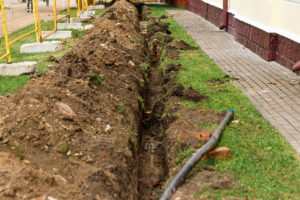
- Excavation for foundations
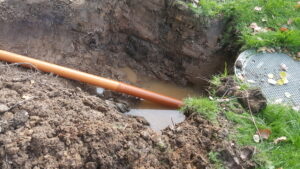
- Installation of drainage systems
- Pouring and setting foundations
- Backfilling and ground levelling
Each stage must be carried out accurately to ensure structural integrity.
Costs of Foundations and Drainage
The cost of groundwork for a house extension varies depending on several factors.
Key cost influences:
- Soil conditions and required foundation type
- Depth and complexity of excavation
- Drainage modifications or upgrades
- Site access and working conditions
- Size and scale of the extension
General Insight
Foundations and drainage can represent a significant portion of the overall project cost, but they are essential investments in the longevity of the extension.
Decision Guidance
- Good option: Stable ground → standard foundations
- Better option: Moderate risk → reinforced or deeper foundations
- Best option: Poor ground → specialist solutions such as piling
Common Problems When Groundwork Is Done Incorrectly
Mistakes during groundwork can have serious consequences.
Potential issues:
- Cracking walls due to poor foundation design
- Water ingress from inadequate drainage
- Uneven floors caused by settlement
- Structural damage requiring expensive repairs
Real-World Example
An extension is built with insufficient foundation depth on clay soil. Seasonal movement causes cracks to appear within a year, requiring costly remedial work that could have been avoided with proper planning.
How Long Does Groundwork Take?
The timeline for groundwork depends on the complexity of the project.
Typical durations:
- Small extensions: 1 to 2 weeks
- Medium extensions: 2 to 4 weeks
- Larger or complex projects: longer depending on conditions
Delays can occur if unexpected ground conditions are encountered.
Choosing the Right Approach
Every house extension is different, so there is no one-size-fits-all solution.
Key considerations:
- Ground conditions identified during surveys
- Size and design of the extension
- Existing building structure
- Long-term durability requirements
Working with experienced professionals ensures the correct decisions are made at every stage.
For further reading on building foundations, see
https://en.wikipedia.org/wiki/Foundation_(engineering)
Frequently Asked Questions
Q1: Do I always need new foundations for a house extension?
Yes, extensions require their own foundations designed to support the new structure safely.
Q2: Can existing drainage be reused?
Sometimes, but it depends on capacity and condition. Modifications are often required.
Q3: How deep do extension foundations need to be?
Depth depends on ground conditions, nearby trees and building regulations.
Q4: What is the biggest risk in extension groundwork?
Poor planning and incorrect foundation design are the most common causes of problems.
A successful house extension depends on solid foundations and effective drainage. Getting these elements right from the start ensures your investment adds value and performs reliably for years to come.
If you are planning a house extension and need expert groundwork advice, contact CJ Groundworks today.
Phone: 0140 373 3214
Email: chris@cjgroundworks.com
Find out more: https://cjgroundworks.com/