Soil type and foundations are closely linked because the ground beneath a building determines how well the structure will be supported. Before choosing between strip foundations, trench fill foundations, raft foundations or piled foundations, it is important to understand the condition, strength and behaviour of the soil on site.
A foundation is only as reliable as the ground it sits on. If the soil is strong, stable and consistent, a straightforward foundation may be suitable. If the ground is weak, made up, shrinkable, waterlogged or variable, a different foundation solution may be needed. Getting this wrong can lead to movement, cracking, settlement, damp issues and expensive remedial work.
For homeowners, developers, builders and commercial clients, soil type should never be treated as a minor detail. It affects excavation, drainage, foundation depth, concrete requirements, timescales and cost. CJ Groundworks provides professional building foundation and groundworks services across Sussex, East Sussex, Surrey and Kent, helping clients prepare sites properly from the ground up.
Why Soil Type Matters for Foundations
Soil carries the load of the building through the foundations. Different soils behave in different ways under weight, moisture and seasonal change. Some soils are strong and stable, while others expand, shrink, settle or wash away more easily.
The purpose of a foundation is to spread the building load safely into the ground. If the soil cannot support that load properly, the structure above may move. This is why the same foundation type is not suitable for every project.
For example, a small garden room on firm, well-drained ground may only need a properly prepared concrete base. A house extension on shrinkable clay may need deeper foundations. A development on weak or filled ground may require a raft foundation or piled foundations.
Understanding the soil helps the contractor, builder or engineer decide what preparation is needed before construction begins.
Common Soil Types Found on Building Sites
Every site is different, but several soil types are commonly encountered during groundworks and foundation preparation. Each one has its own challenges.
Clay soil is common in many parts of the UK. It can shrink when dry and swell when wet, which may cause ground movement. This is especially important near trees, where roots can remove moisture from the soil.
Sandy soil usually drains well, but it may be loose and less stable if not compacted properly. It can also be affected by water movement, especially on sloping sites or where drainage is poor.
Chalk can provide good bearing capacity in some conditions, but it may vary across a site. It can also contain pockets, voids or softer areas that need proper assessment.
Silty soil can hold moisture and may become unstable when wet. It is often more vulnerable to movement and poor drainage than some other ground types.
Made ground is ground that has previously been disturbed, filled or built up. It may contain rubble, old foundations, waste material or inconsistent layers. This can make it unpredictable and may require more careful foundation design.
Peaty or organic soils are generally poor for supporting foundations because they can compress and hold water. These soils often require specialist consideration.
How Soil Affects Foundation Choice
Soil type helps determine which foundation method is most appropriate. The goal is to transfer the building load into stable ground while reducing the risk of future movement.
Strip foundations are often used where the ground has suitable bearing capacity at a relatively shallow depth. They involve excavating trenches and placing concrete strips beneath walls. They can be suitable for many domestic projects, but only where the ground conditions are appropriate.
Trench fill foundations are similar in principle but use more concrete, often filling most of the trench. They can reduce the amount of blockwork needed below ground and may be useful where deeper excavation is required.
Raft foundations spread the load over a larger area. They may be considered where ground conditions are weaker or where loads need to be distributed more evenly. A raft can help reduce the risk of differential settlement, but it must be properly designed and installed.
Piled foundations transfer loads down to deeper, stronger ground. They are often used where shallow ground is unsuitable, such as made ground, weak soils or sites with significant movement risk.
CJ Groundworks supports a range of foundation types, including strip foundations, raft foundations, trench fill foundations and piled foundations. You can find more information on the building foundations page.
Soil Strength and Bearing Capacity
Bearing capacity is the ability of the soil to support the weight placed on it. Strong, compact ground can usually carry greater loads than weak, soft or loose ground.
If the soil has poor bearing capacity, the foundation may need to be wider, deeper or designed differently. In some cases, unsuitable material may need to be removed and replaced. In others, a raft or piled solution may be required.
The size and purpose of the building also matters. A small domestic extension, a garage, a commercial unit and an industrial structure will all place different loads on the ground. The soil must be capable of supporting those loads safely.
Ignoring bearing capacity can lead to settlement. This happens when the ground compresses under the weight of the building. Small amounts of settlement can be expected in some cases, but uneven or excessive settlement can cause structural problems.
Soil Movement and Shrinkage
Some soils move more than others. Clay is a common example because it changes volume depending on moisture content. In dry weather, clay can shrink. In wet weather, it can swell. This movement can affect foundations if it is not allowed for.
Trees and vegetation can make this more complicated. Tree roots draw moisture from the ground, which can cause clay soils to shrink. If trees are removed, moisture levels may increase again, potentially causing the soil to swell.
This is one reason why foundation depth may need to be adjusted near trees, hedges or areas of known shrinkable clay. A foundation that is too shallow may be more affected by seasonal ground movement.
Ground movement is not limited to clay. Loose fill, poorly compacted ground and waterlogged soils can also move or settle over time. Proper assessment helps identify these risks before construction begins.
Soil and Drainage Conditions
Drainage is another reason soil type matters. Some soils drain quickly, while others hold water. Poor drainage can weaken the ground, delay excavation and create long-term problems around foundations.
Clay soils often drain slowly, which can lead to wet ground and standing water. Sandy soils drain more quickly, but may lose stability if water washes through them. Made ground can be unpredictable because water may collect in pockets or flow through loose material.
Foundation design and drainage design often need to be considered together. Surface water should be directed away from the building, and drainage systems should be properly installed to avoid saturating the ground around foundations.
If water is allowed to collect near a building, it can soften the soil, increase movement risk and contribute to damp or erosion problems. This is why groundworks, drainage and foundations should be planned as connected parts of the project, not separate afterthoughts.
For drainage-related support, CJ Groundworks provides services including foul water drainage, surface water drainage, soakaways, French drains, stormwater systems, drain repairs, CCTV drain surveys and drain jetting. More details are available on the drainage contractor page.
Why Made Ground Needs Careful Attention
Made ground can be one of the most challenging conditions for foundations. It may look firm at the surface but contain hidden layers of rubble, soft material, voids or poorly compacted fill.
This type of ground is often found on previously developed sites, infilled areas, old yards, former outbuildings or land that has been levelled in the past. Because the ground has been disturbed, it may not behave consistently across the site.
One part of the excavation may reveal firm natural ground, while another may uncover loose fill or buried debris. This can create a risk of differential settlement, where one part of the structure moves more than another.
In these situations, a more robust foundation solution may be needed. That might involve removing unsuitable material, excavating deeper, using a raft foundation or considering piled foundations. The right approach depends on the site and the building requirements.
How Soil Type Affects Excavation
Soil type also affects how excavation is carried out. Some ground can be excavated cleanly and safely, while other ground may collapse, hold water or require additional support.
Clay can become sticky and heavy when wet, making excavation slower. Sandy or loose soil may collapse into trenches if not managed correctly. Waterlogged ground can make trenches unstable and may require pumping or temporary measures.
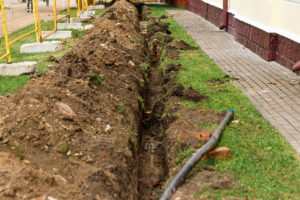
The depth of excavation is also influenced by soil conditions. If suitable ground is found at a shallow depth, excavation may be more straightforward. If the upper layers are weak, the trench may need to go deeper until stable ground is reached.
Good excavation practice is essential because the foundation must sit on sound, undisturbed ground. If the base of the trench is softened, uneven or disturbed, it may need further preparation before concrete is poured.
What Happens If the Wrong Foundation Is Chosen?
Choosing the wrong foundation for the soil type can cause serious problems. These may not appear immediately, but they can develop over months or years as the ground reacts to load, moisture and weather changes.
Possible problems include wall cracks, uneven floors, sticking doors or windows, gaps around frames, drainage defects, damp patches and visible settlement. In more serious cases, remedial foundation work may be needed.
For commercial and industrial buildings, foundation problems can also affect operations. Uneven surfaces, damaged slabs, drainage failures and structural movement can disrupt access, storage, machinery and safety.
The cost of correcting poor foundation decisions is usually far higher than getting the groundwork right at the beginning. That is why soil type should be properly considered before work starts.
Practical Example: Extension on Clay Soil
Imagine a homeowner planning a rear extension on a property with clay soil. At first glance, the project may seem straightforward. However, the garden has mature trees nearby and the soil becomes very sticky after rain.
If standard shallow foundations are installed without considering the clay and tree influence, seasonal movement could affect the new structure. Over time, this might lead to cracking between the original house and the extension.
A better approach would be to assess the ground conditions, consider tree proximity, excavate to a suitable depth and use an appropriate foundation method. Drainage around the extension should also be considered so rainwater does not collect against the building.
This kind of planning helps reduce the risk of long-term movement and gives the extension a more reliable base.
Practical Example: Concrete Base on Soft Ground
A concrete base for a shed, garage or garden room may seem simple, but soil type still matters. If the base is poured over soft, poorly prepared or waterlogged ground, it may crack, sink or become uneven.
The ground should be excavated to the correct depth, levelled and prepared with a suitable sub-base. The sub-base helps spread loads and improves stability beneath the concrete. If the soil is weak, additional preparation may be required.
This is why even small projects benefit from proper groundworks. A concrete base is only as good as the preparation underneath it.
More information about this service is available on the concrete base page.
Why Professional Assessment Is Important
Professional assessment helps identify risks before they become problems. An experienced groundworks contractor will look at site access, levels, visible ground conditions, drainage, nearby trees, existing structures and the type of work being planned.
For some projects, a structural engineer or formal ground investigation may also be required. This is especially likely for larger buildings, poor ground, unusual loads or sites with known ground movement issues.
Even where a project appears simple, professional groundwork can prevent costly mistakes. Foundations, drainage and site preparation all need to work together to create a stable, practical and long-lasting result.
CJ Groundworks brings over 35 years of experience to domestic, commercial and industrial groundworks projects, with fully insured services across Sussex, East Sussex, Surrey and Kent.
FAQs
What soil is best for foundations?
Stable, well-compacted ground with good bearing capacity is usually best for foundations. However, every site is different, and the right foundation depends on the soil type, building load, drainage conditions and depth of suitable ground.
Is clay soil bad for foundations?
Clay soil is not automatically unsuitable, but it needs careful consideration because it can shrink and swell with moisture changes. Foundation depth and design may need to account for seasonal movement and nearby trees.
Can you build on made ground?
You can sometimes build on made ground, but it needs proper assessment. Made ground can be inconsistent and may contain rubble, voids or poorly compacted material. A suitable foundation design is essential.
How do I know what soil type my site has?
Soil type can often be identified during site assessment or excavation, but some projects may need a ground investigation. An experienced contractor can advise whether further checks are needed.
Does soil type affect drainage?
Yes. Some soils drain quickly, while others hold water. Poor drainage can weaken ground conditions and affect foundation performance, so drainage should be considered during groundwork planning.
Summary
Soil type and foundations should always be considered together. The ground beneath a structure affects which foundation is suitable, how deep excavation needs to be, how drainage should be managed and how the building will perform over time.
Clay, sand, chalk, silt, made ground and organic soils all behave differently. Some shrink, some hold water, some settle and some vary across the site. Understanding these differences helps prevent movement, cracking, drainage issues and expensive future repairs.
For professional building foundations, groundworks, drainage and concrete base preparation across Sussex, East Sussex, Surrey and Kent, contact CJ Groundworks. Call 0140 373 3214 or email chris@cjgroundworks.com to discuss your project.
Phone: 0140 373 3214
Email: chris@cjgroundworks.com
Find out more: https://cjgroundworks.com/